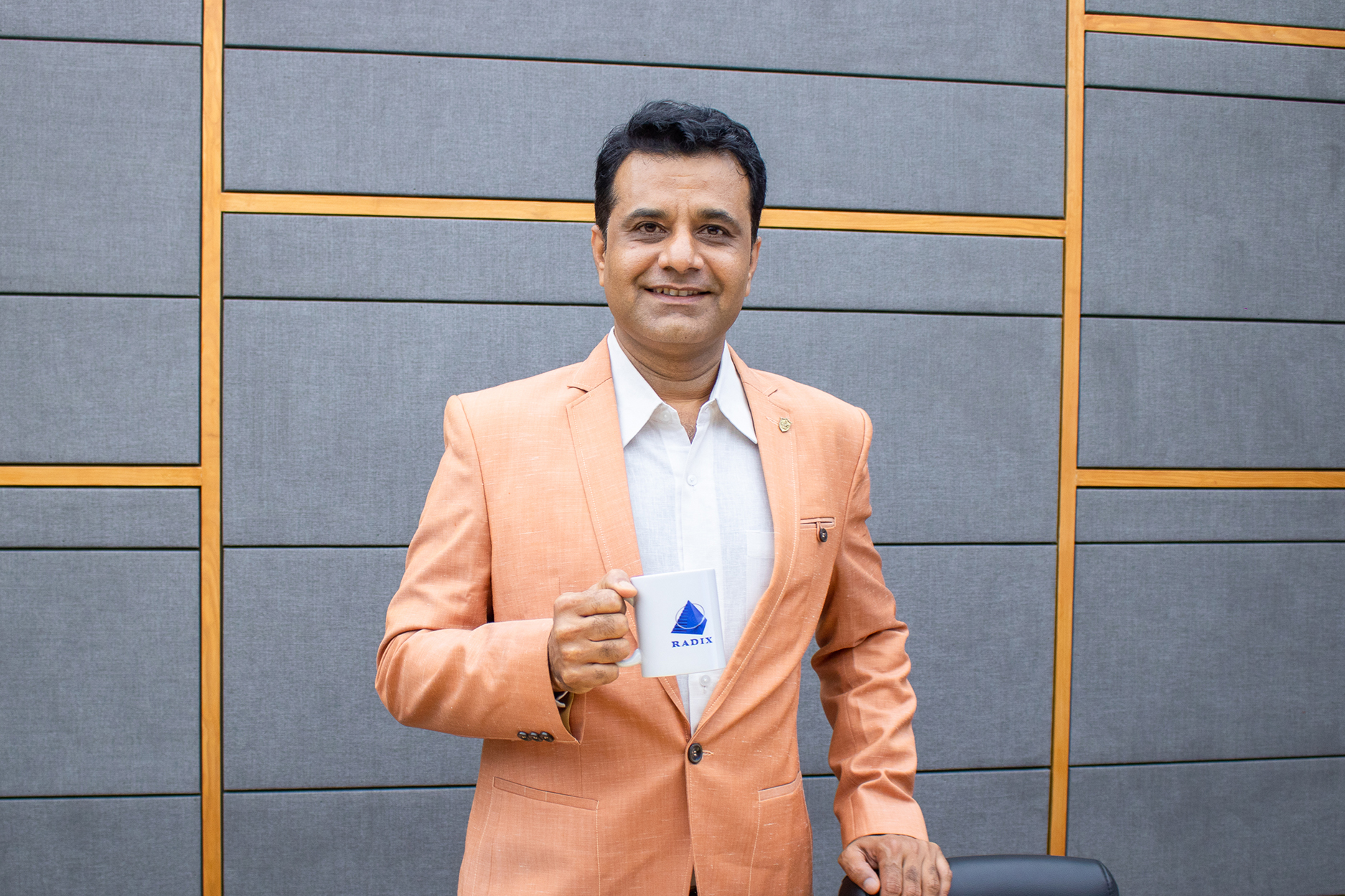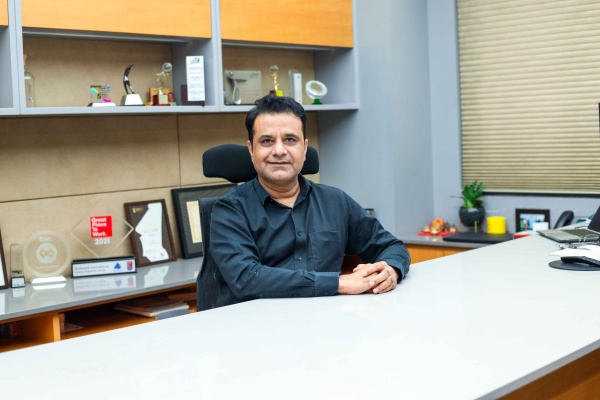
Interview
Dharmesh Acharya
Radixweb, United States
Dharmesh Acharya is COO at Radixweb, where he focuses on ensuring consistent, scalable delivery of technology solutions through structured systems built around people, processes, and engineering discipline. His leadership reflects a long-standing commitment to operational excellence as the company continues evolving software development practices in an AI-first era.
1 Congratulations on your achievement in the TITAN Business Awards! Could you tell us a bit about yourself and your role, as well as your business or organization?
I’m Dharmesh Acharya, COO at Radixweb. My role is to ensure that what we promise as a technology partner actually translates into consistent, scalable delivery for our clients. That means building systems around people, processes, and engineering practices that don’t just work once but work reliably across projects, teams, and time. Radixweb has been around for 26 years now and today we focus heavily on helping businesses build and evolve software in what is clearly becoming an AI-first world.
2 Winning such a prestigious award is a milestone for many. How did you feel when you first learned about your win, and what does this recognition mean to you personally or professionally?
The first feeling, honestly, was satisfaction. We’ve been delivering the same high quality work for decades now, and over the course of our journey, we’ve received many accolades and honors for our work. The TITAN Business Awards just validated that our processes and principles are still standing. And for me, this wasn’t just about being honored for one great project, but our way of working being recognized by industry peers. It tells us that the way we’re building solutions, not just technology products, and our discipline, our engineering rigor, our focus on long-term value. All of it is being seen and understood. Professionally, it reinforces that we’re on the right path. Personally, it’s satisfying because it reflects years of quiet, consistent work from teams that don’t always get visibility.
3 What inspired you to submit your entry for this competition, and what aspects of your submission made you feel confident it could stand out?
We didn’t submit, thinking “this is a standout project.” We submitted because we believed the way we executed it represented something larger, like how modern software should be built. Every client we engage with, every project we deliver, gets the same attention to detail and technical excellence from us. As for what gave us confidence that it would stand out was not just the outcome of the project, but what went into building it. In an AI-first era, it’s not just about delivering features. It’s about how you design systems that can evolve, how you ensure data integrity, and how you embed intelligence responsibly. That’s what makes our solutions stand out in the real world too.
4 Is there a particular moment in your career or business journey that you consider a turning point? How did it shape your path to this achievement?
A major turning point was when we consciously shifted from being a delivery-focused company to a systems-focused organization. Earlier, success was measured project by project. Now, success is measured by how repeatable and resilient our delivery model is. That shift forced us to rethink everything from how we structure teams to how we handle knowledge and how we integrate AI into workflows. This award is a result of that shift.
5 Were there significant obstacles you faced along the way, and how did you or your team overcome them to reach this success?
Absolutely. One of the biggest challenges has been resisting the pressure to move fast at the cost of structure. The market today rewards speed, especially with AI. But we’ve seen firsthand that speed without discipline leads to fragile systems. Internally, it took effort to align everyone around building things the “right way”, even when it felt slower. Overcoming that required strong leadership alignment and a culture that values long-term thinking over short-term wins.
6 Winning is often just the beginning. How do you plan to leverage this recognition to further your business goals or inspire others in your industry?
Recognition like this gives us credibility, but more importantly, it gives us a responsibility to share what’s working. We want to use this moment to talk more openly about how software needs to be built today. If this encourages more organizations to invest in better engineering practices instead of quick fixes, that’s a meaningful outcome.
7 Participating in awards can be a learning experience. What do you think is the greatest benefit of entering competitions like this?
It forces reflection. When you prepare a submission, you’re essentially asking yourself: what did we really do well, and why? That exercise alone is valuable. It helps you identify patterns that you can double down on and gaps you need to address. The recognition is a bonus, but the clarity you gain is the real benefit.
8 Is there someone in your team or organization whose efforts played a significant role in this achievement that you'd like to acknowledge?
This isn’t the result of one person or even one team. It’s the outcome of a culture that has been built over years. That said, I’d specifically acknowledge our engineering leaders and delivery managers who consistently push for discipline even under pressure. They’re the ones ensuring that our standards don’t slip.
9 The business landscape is ever-changing. What trends or developments do you see shaping the future of your industry, and how are you or your business preparing to adapt?
The biggest shift is that AI is no longer an add-on but is now foundational to any software solution that is being developed. But what’s interesting here is that this makes fundamentals even more important, not less. Clean data, well-architected systems, and strong governance are becoming critical. We’re investing heavily in structured processes, better data practices, and building AI capabilities that are grounded in real-world constraints, not just experimentation.
10 Looking back at your journey, is there any advice you would give your younger self or someone just starting out in your industry?
Focus on understanding systems, not just tools. Tools will change (very quickly now!), but the ability to think in terms of systems, dependencies, and long-term impact will always be valuable. I think that kind of system thinking is what helps deliver projects that achieve their true purpose for organizations and, of course, also go on to win industry-wide recognition.
11 For those who are considering to enter, what advice would you share about crafting a strong submission or maximizing their chances of success?
Don’t try to make it sound impressive, just make it real. Talk about what you actually did, what challenges you faced, and how you solved them. Judges can tell the difference between something that’s polished and something that’s genuine. Also, highlight the thinking behind your work, not just the outcomes.
12 What’s next for you or your business after this recognition? Are there any exciting projects, collaborations, or goals that you would like to share?
We’re doubling down on building systems that are ready for the AI-first future. That includes refining how we integrate AI into software development, improving how we manage data pipelines, and continuing to strengthen our delivery frameworks. There are also a few internal initiatives around AI-assisted engineering that we’re excited about, but the core focus remains the same: build in a way that scales and lasts.
13 Lastly, is there anything you’d like to share with us or the business community? Perhaps a final reflection, message, or insight?
We, as a society, are at a point where it’s easy to get caught up in what’s new and exciting. But the real differentiator will be how well you build, not how fast you adopt. Technology will keep evolving, but disciplined execution and strong systems will always be the foundation of meaningful success.