Interview
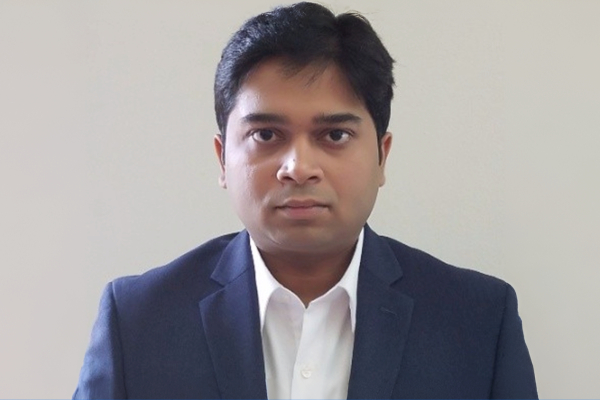
Abhradeep Chatterjee
United States
As an Associate Director at NTT DATA, Abhradeep Chatterjee leads initiatives at the intersection of artificial intelligence and enterprise operations. His work centers on building intelligent systems that reduce latency, improve reliability, and shift organizations toward more autonomous, decision-led models.
1 Congratulations on your achievement in the TITAN Business Awards! Could you tell us a bit about yourself and your role, as well as your business or organization?
I’m currently an Associate Director at NTT DATA, where I focus on AI-driven enterprise transformation and large-scale operational systems. My work centers on bridging the gap between artificial intelligence capabilities and real-world business outcomes. Over the years, I’ve worked on designing and implementing intelligent systems that move beyond traditional monitoring and automation toward more autonomous, decision-centric operations. The goal has always been to improve reliability, reduce operational latency, and enable organizations to operate at scale with greater efficiency.
2 Winning such a prestigious award is a milestone for many. How did you feel when you first learned about your win, and what does this recognition mean to you personally or professionally?
It was both humbling and validating. Much of the work I’ve been involved in focuses on solving complex, systemic challenges that aren’t always immediately visible externally. This recognition is meaningful because it reflects that the impact of that work—particularly in transforming how enterprise systems operate—is being acknowledged at a broader, international level. Professionally, it reinforces the importance of continuing to push beyond incremental improvements toward more fundamental innovation.
3 What inspired you to submit your entry for this competition, and what aspects of your submission made you feel confident it could stand out?
The inspiration came from a recurring gap I observed across organizations: despite significant investment in AI, most systems remained reactive and heavily dependent on human intervention. My submission focused on addressing this gap through a system-level approach—integrating intelligence directly into operations rather than treating it as an external layer. What gave me confidence was the combination of conceptual clarity and real-world impact, where the ideas were not only defined but also implemented and validated in enterprise environments.
4 Is there a particular moment in your career or business journey that you consider a turning point? How did it shape your path to this achievement?
A key turning point was recognizing that many operational challenges weren’t due to a lack of tools or data, but due to how systems were architected. That realization shifted my focus from improving individual components to rethinking the system as a whole—how data, intelligence, decision-making, and execution interact. It ultimately led to the development of a more integrated approach to operational systems, which became central to my work.
5 Were there significant obstacles you faced along the way, and how did you or your team overcome them to reach this success?
One of the biggest challenges was overcoming fragmentation—both technical and organizational. Enterprise systems are often built in silos, and integrating intelligence across them requires alignment across multiple teams and functions. We addressed this by focusing on architecture and governance—creating frameworks that allowed intelligence to operate safely and consistently across systems. It was as much about designing the right technical model as it was about enabling adoption at scale.
6 Winning is often just the beginning. How do you plan to leverage this recognition to further your business goals or inspire others in your industry?
This recognition provides an opportunity to further contribute to the broader conversation around how AI is applied in enterprise environments. I plan to continue sharing insights through publications, speaking engagements, and collaborations—particularly around building systems that are not just intelligent, but operationally effective. If it helps shift the industry toward more outcome-driven approaches, that would be a meaningful extension of this recognition.
7 Participating in awards can be a learning experience. What do you think is the greatest benefit of entering competitions like this?
It creates an opportunity to step back and evaluate your work from a broader perspective. In day-to-day operations, the focus is often on execution. Competitions like this encourage reflection—on impact, originality, and relevance—which can be incredibly valuable. They also provide exposure to diverse ideas and approaches across the industry.
8 Is there someone in your team or organization whose efforts played a significant role in this achievement that you'd like to acknowledge?
While this recognition is individual, the outcomes are always the result of collaborative effort. I’ve had the opportunity to work with highly capable teams who bring depth across engineering, operations, and architecture. Their ability to translate ideas into real-world systems is a critical part of what makes this kind of work possible.
9 The business landscape is ever-changing. What trends or developments do you see shaping the future of your industry, and how are you or your business preparing to adapt?
One of the most important shifts is the move from AI as an analytical tool to AI as an operational capability. Organizations are beginning to realize that insights alone are not enough—systems need to act on those insights in real time. This is driving a transition toward more autonomous and adaptive systems. Preparing for this shift requires rethinking architecture, governance, and decision-making processes—not just adopting new tools.
10 Looking back at your journey, is there any advice you would give your younger self or someone just starting out in your industry?
Focus on understanding systems, not just technologies. Technologies evolve quickly, but the underlying principles of how systems operate, scale, and interact remain critical. Developing that perspective early can help in identifying problems that are worth solving and solutions that create lasting impact.
11 For those who are considering to enter, what advice would you share about crafting a strong submission or maximizing their chances of success?
Clarity and impact matter more than complexity. A strong submission clearly defines the problem being solved, explains why it matters, and demonstrates measurable outcomes. It’s important to show not just what was done, but how it changes the way something operates or performs.
12 What’s next for you or your business after this recognition? Are there any exciting projects, collaborations, or goals that you would like to share?
Going forward, I plan to continue expanding the work around operationalizing AI at scale—both through practical implementations and thought leadership. This includes further developing system-level frameworks, contributing to industry discussions, and exploring collaborations that push toward more autonomous, resilient enterprise systems.
13 Lastly, is there anything you’d like to share with us or the business community? Perhaps a final reflection, message, or insight?
We’re at an interesting point where technology has advanced significantly, but how we apply it is still evolving. The next phase of progress will come from integrating intelligence into how systems operate—not just how they analyze. Organizations that focus on outcomes, adaptability, and system-level thinking will be best positioned to lead that shift.

